Memento Mori
Bridge between time and space
A German-Polish art exhibition by Hanna Krezlewska & Robert Koch. What awaits you?
- Cultural spaces of memory
- Artistic explorations
- The theme of transience
Duration of exhibition:
7. November 2025 – 15. February 2026
Start:
7. November 2025 | 7:00 PM
Vernissage with the artists | Gothic concert with Ghosts Over Dresden (DE) and cabaret grey (PL)
Main exhibition period:
7. – 31. November 2025
During this period the exhibition can be seen in its complete form.
From December 04, 2025, a section of the exhibition focusing on Jewish themes will continue to be presented as part of a new project.
Continuation and extension: 1 January – 15 February 2026
Where will the exhibition take place?
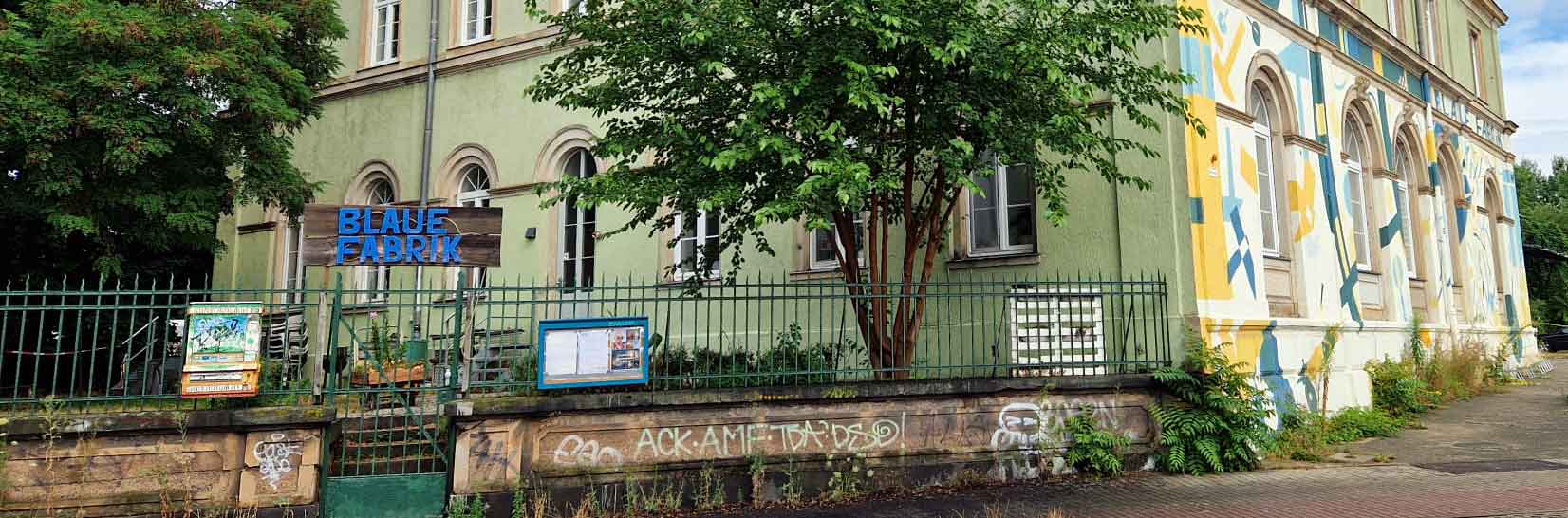
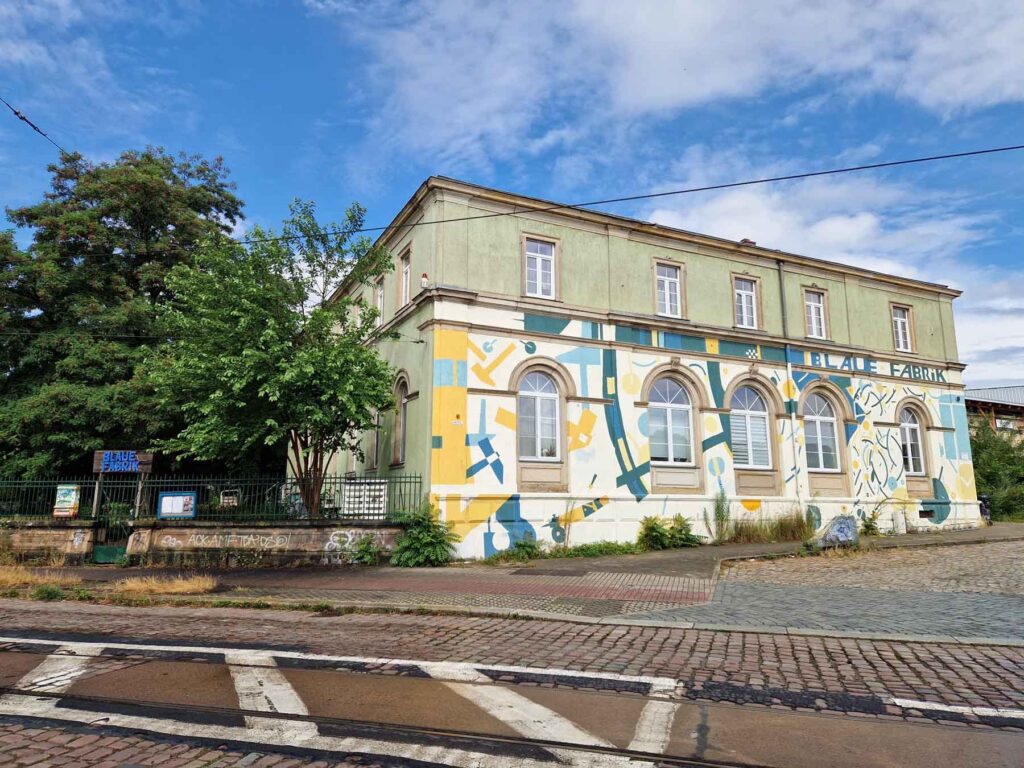
Künstlervereinigung blaueFABRIK e.V.
Eisenbahnstraße 1
01097 Dresden
The exhibition offers valuable insights
into cultural spaces of memory and artistic explorations of the theme of transience – we cordially invite all interested parties to participate and engage in dialogue.
The goal? An intercultural dialogue
The project by Hanna Krezlewska (born in Breslau, now living in Dresden’s Neustadt district) and Robert Koch (Radeberger) is dedicated to the exhibition “Memento Mori: Bridge between Time and Space,” which takes place around All Saints’ Day (opening: November 7, 2025) in Dresden’s Neustadt district.
The aim of the project is to create an intercultural dialogue between German and Polish artists, emphasizing commonalities in the perception of death and transience.
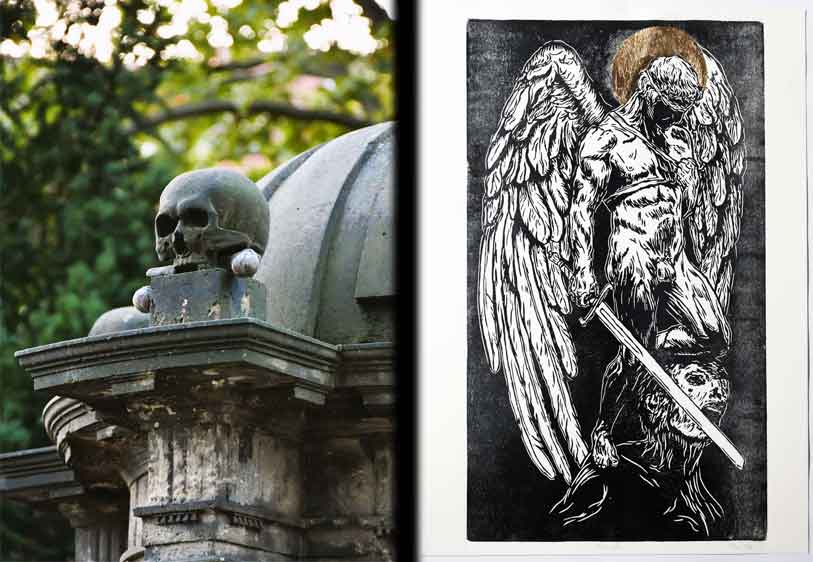
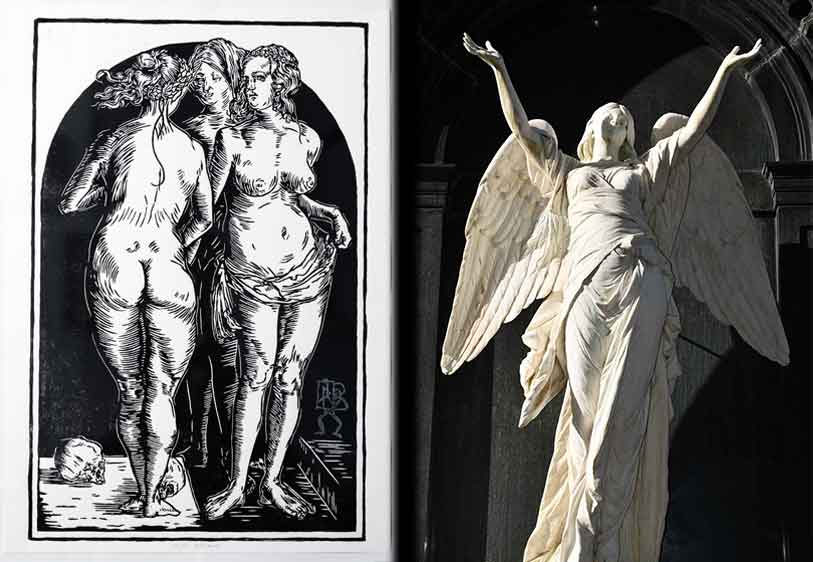
The exhibition focuses on photographs and linocut prints that focus on European and global cemeteries and the theme of death and transience.
Hanna Krezlewska’s photographs offer an unconventional perspective on the passing of things and address the significance of cemetery architecture as a site of remembrance.
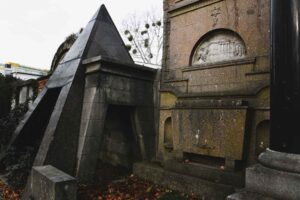
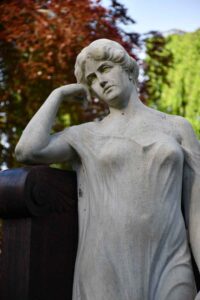
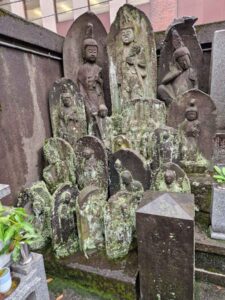

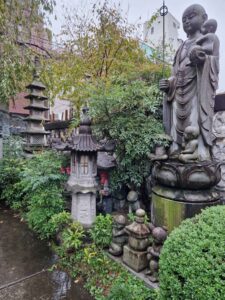
The artist places the cemetery at the center of her work as a cultural artifact and as a space for mourning and remembrance.
G. Franck
Modern tombs (1905)
„Anyone who wants to get an idea of the culture of a people must not carelessly pass by their cemeteries and tombs.“
Hanna Krezlewska shares this view: For her, cemeteries tell stories about the lifestyles, values, beliefs, and artistic expression of the deceased.
Through engaging with these places, a deeper understanding of a people’s culture can be gained.
On her world travels, she therefore regularly visits cemeteries – in the exhibition, you will encounter Polish, German, Jewish, Maltese, and Japanese gravesites as well as historical memorial sites. The focus is not only on traditional mourning figures, but also on the diversity of symbolic forms of expression.
Especially in November, around All Saints’ Day, it becomes particularly clear how differently those left behind deal with pain and loss – and the role cemeteries play as places of remembrance.
Robert Koch’s linocuts are deeply rooted in the visual language of antiquity and the Middle Ages.
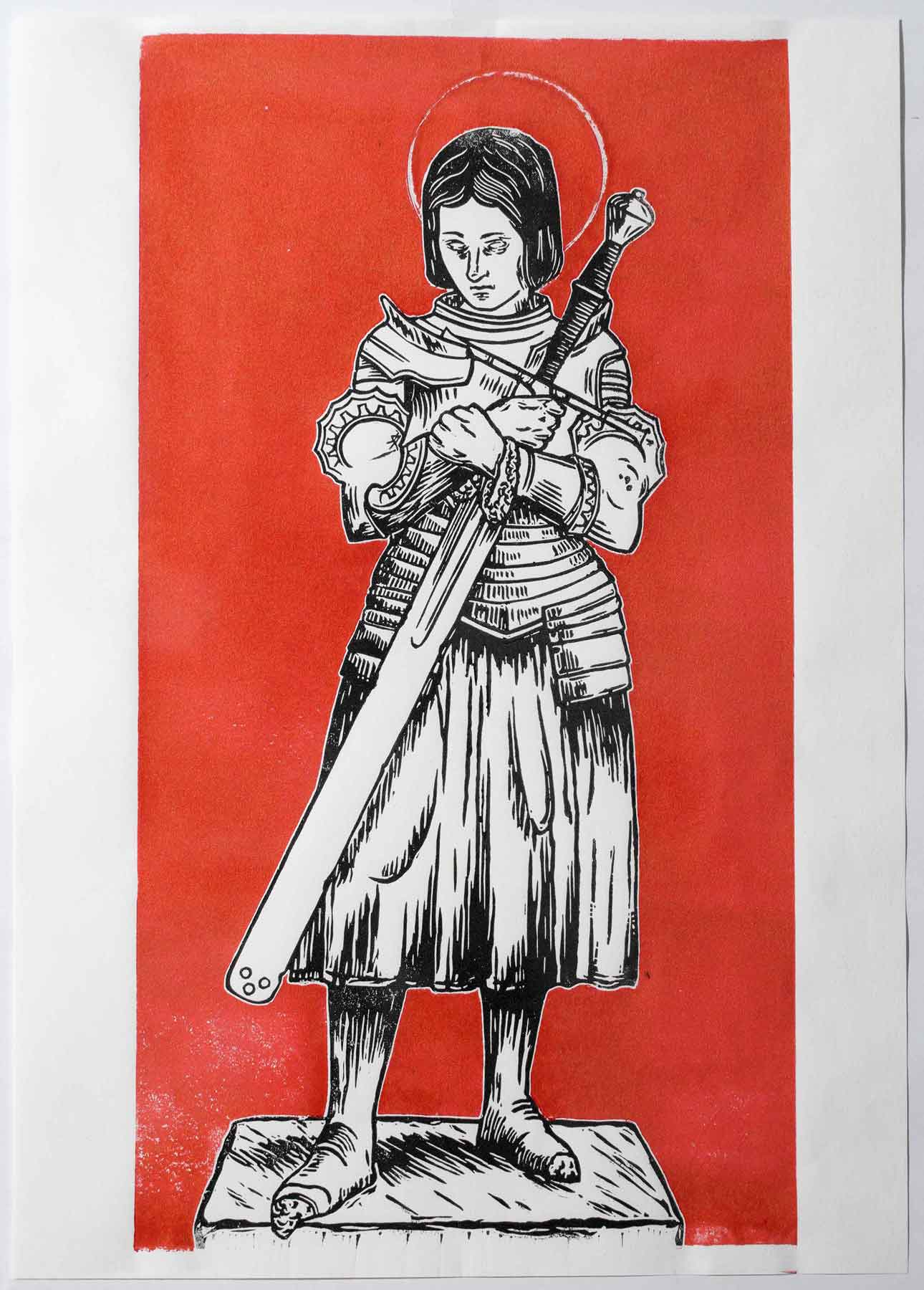
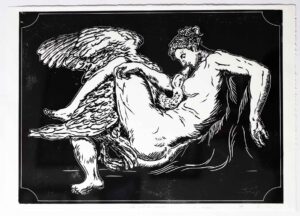
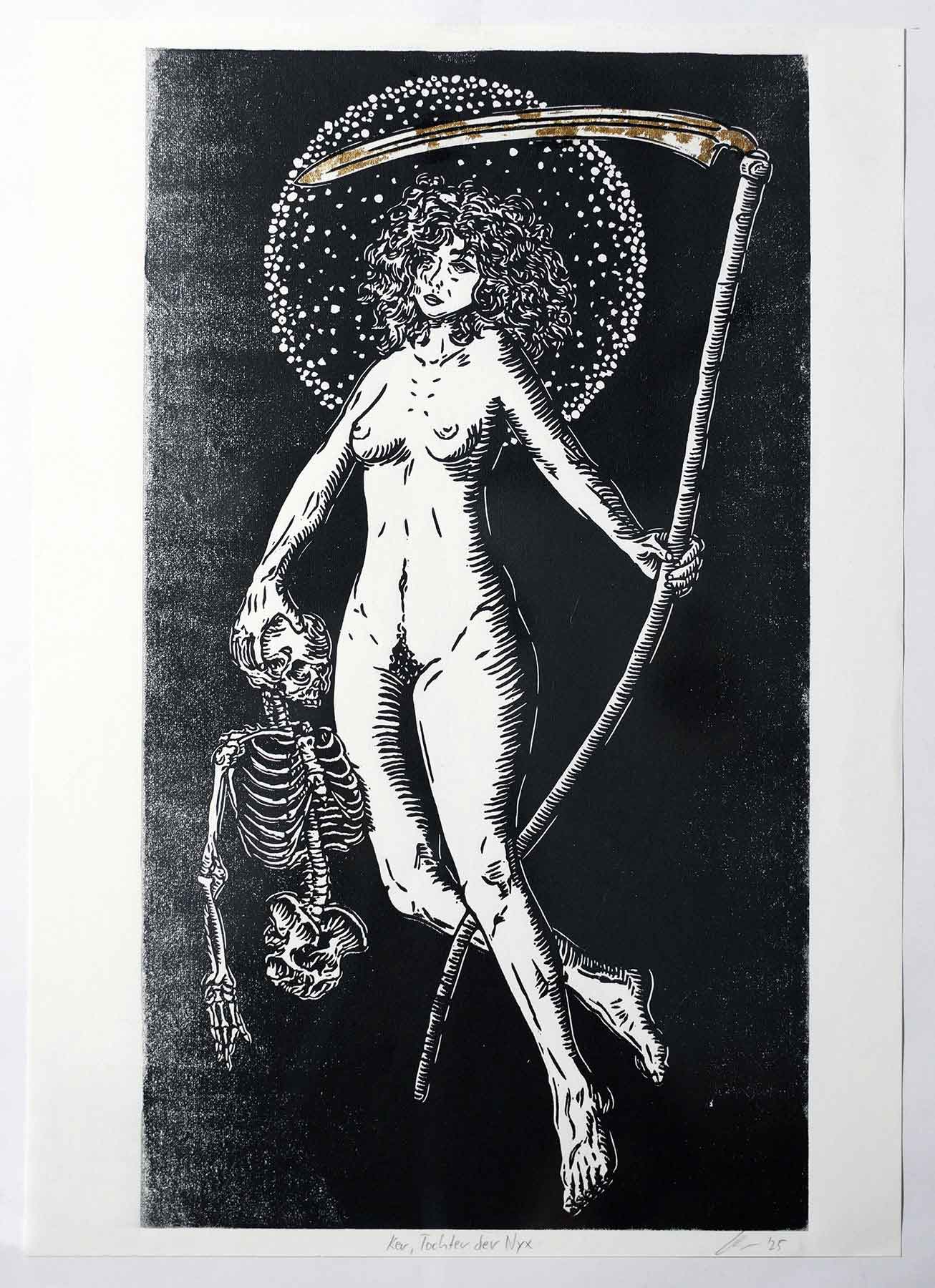
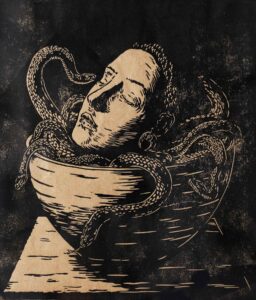
The artist draws his inspiration from mythological narratives, motifs of death, and archetypal figures—themes that played a central role in both eras. In his works, classical myths meet a contemporary form of expression: the linocut, whose clear contrasts and graphic sharpness lend the motifs a special intensity.
Koch’s works such as “Dance of Death I,” “Ker, Daughter of Nyx“, “Thanatos“, and “Niobe’s Youngest Daughter and Apollo” take up central figures and symbols from Greek mythology. The artist is not concerned with simply illustrating traditional stories, but rather with an emotional and spiritual exploration of existential themes such as death, transience, guilt, and redemption.
His works such as “Jupiter“, “Amathriel” and “Animus” also expand this mythological cosmos. They connect ancient deities with angels, inner parts of the soul, and universal forces. In this way, Koch creates a unique visual world that mediates between cultures, eras, and concepts of this world and the next.
The linocut prints are striking not only for their precise craftsmanship, but also for the dense atmosphere they create – an interplay of light and shadow, of life and death.
Interested?
Don’t miss the vernissage on November 7, 2025 | 7:00 PM.
Get to know the protagonists and their artworks while enjoying the sounds of the bands Ghosts Over Dresden (DE) and cabaret grey (PL)
Do you want to know more about the protagonists?
Here you can find the individual short profiles:
Hanna Krezlewska
During this period the exhibition can be seen in its complete form.
Robert Koch
During this period the exhibition can be seen in its complete form.
Zum Abschluss
We would like to thank everyone who supported us (emotionally, morally, and organizationally) in preparing the exhibition—the deuteragonists behind the scenes, the artists’ association Künstlervereinigung blaueFABRIK e.V. and all visitors for their interest and attention.